
Table of Contents
Overview
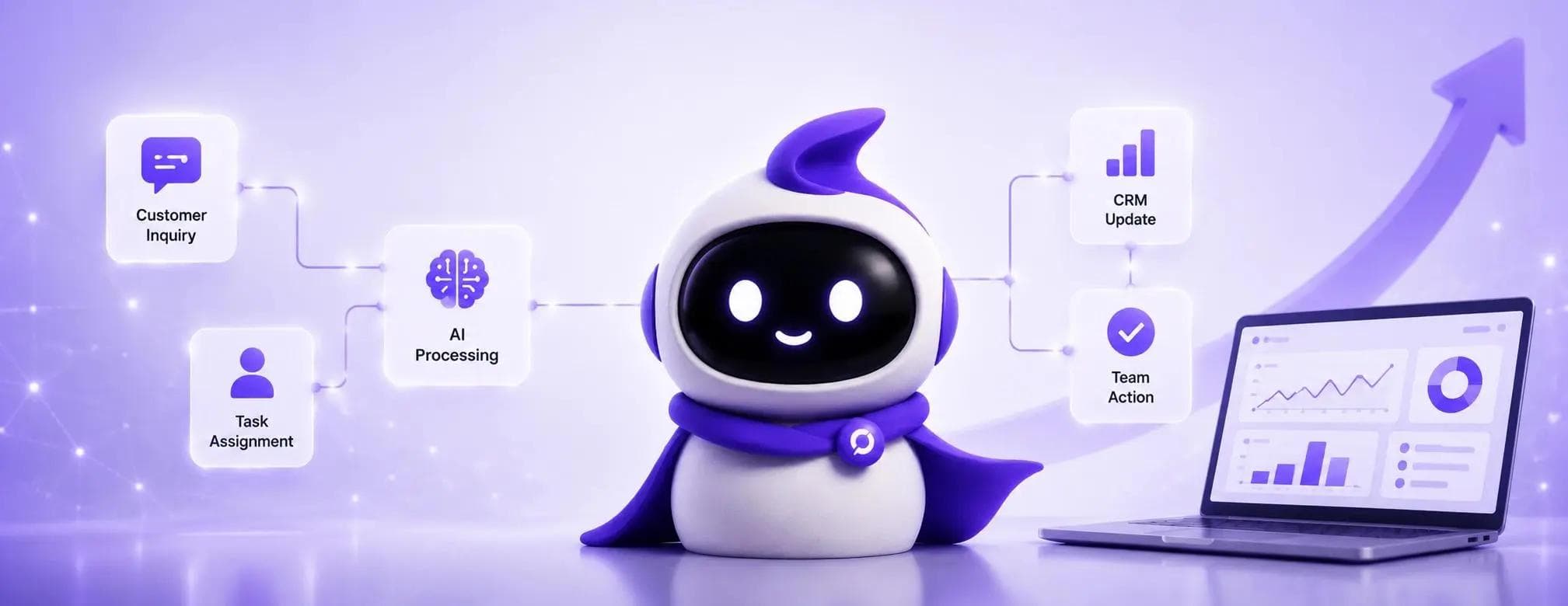
A rapidly growing service based business was experiencing operational slowdowns caused by repetitive administrative work, disconnected systems, and increasing customer inquiries. Leadership wanted to improve efficiency without hiring additional staff.
Socieas designed and implemented a custom AI automation ecosystem that streamlined workflows, synchronized information across platforms, automated repetitive processes, and created a scalable operational foundation.
Automation Lifecycle
|
Lead Capture
|
→ |
AI Analysis
|
→ |
Automation
|
→ |
Reporting
|
The Challenge
Rapid growth exposed several operational bottlenecks. Customer inquiries required manual handling, document processing consumed valuable employee time, and disconnected systems limited visibility across the business.
Before Automation
| Manual Replies |
| ↓ |
| Spreadsheet Updates |
| ↓ |
| Email Follow Ups |
| ↓ |
| Slow Decisions |
After Automation
| AI Qualification |
| ↓ |
| CRM Sync |
| ↓ |
| Smart Routing |
| ↓ |
| Real Time Insights |
Our Approach
Instead of replacing existing software, Socieas enhanced the client's infrastructure with intelligent automation. Every workflow was redesigned around efficiency, reliability, and scalability while maintaining human oversight for business critical decisions.
Implementation Roadmap
Audit
Map
Build
Optimize
Solution Architecture
The final ecosystem combined multiple automation layers into one intelligent operational framework capable of supporting future growth.
Connected Automation Architecture
|
Website Leads
|
→ |
AI Engine
|
→ |
CRM
|
| ↓ | ||||
|
Documents
|
→ |
Workflow
|
→ |
Dashboard
|
Results
Within months of deployment, the automation ecosystem delivered measurable operational improvements. Repetitive administrative work was significantly reduced, response times improved, and teams were able to focus on higher value initiatives rather than routine tasks.
Operational Performance Dashboard
|
70%
Manual Work Reduced
|
80%
Faster Responses
|
24/7
Automation Running
|
From Manual Operations to Intelligent Automation
| Before | After | |
| Manual Processing | → | AI Driven Workflows |
| Delayed Follow Ups | → | Instant Routing |
| Scattered Systems | → | Unified Operations |
| Limited Reporting | → | Real Time Dashboards |
Key Technologies Used
Business Impact
The project fundamentally changed how the organization operated. Processes that once relied on manual intervention became scalable digital workflows capable of supporting long term business growth while improving visibility and service quality.
Frequently Asked Questions
What type of businesses benefit from AI automation?
Service businesses, agencies, healthcare providers, financial firms, and operations heavy organizations can significantly reduce repetitive work and improve efficiency through AI automation.
Can AI automation integrate with existing CRM systems?
Yes. Custom automation solutions can connect with existing CRM platforms, internal software, APIs, and databases without requiring a complete replacement.
Does automation eliminate the need for human oversight?
No. The most effective implementations combine AI driven workflows with human review for business critical decisions, ensuring accuracy and control.
How long does an AI automation implementation take?
Timelines depend on complexity, integrations, and business processes, but many organizations begin seeing measurable operational improvements within weeks of deployment.